
Used Clothing Grading Standards
Grade is the single biggest factor in whether a container sells in your market. Here's how the industry sorts material — and how we grade at our Houston facility.
Why Used Clothing Grading Standards Matter
A wholesale buyer in Honduras, Chile, or Italy doesn't buy fabric — they buy what their customers want. The wrong grade mix sits in a warehouse; the right mix moves volume. Clear used clothing grading standards are how a serious supplier delivers the second one consistently, container after container.
The used clothing grading standards used across the wholesale trade boil down to four tiers — Cream, Grade A, Grade B, and Grade C — defined by condition, fashion currency, brand profile, and fiber composition. Buyers who understand these tiers can spec a container that fits their market, their margins, and the way their customers actually shop. Buyers who don’t end up with bales that won’t move, even at deep discounts. The point of this page is to give you a working framework you can use on every quote.
References — on the broader sustainability picture, see Ellen MacArthur Foundation: A New Textiles Economy. On post-consumer textile flows, the US EPA textiles data is the standard source.
The Four Grade Tiers
US Dynamics grading tiers used across the wholesale used clothing trade.
Cream — Premium
The top tier. Designer brands, vintage pieces, luxury items, and accessories that retain or appreciate in value. Hand-picked from credential bales before sorting.
- Condition: Excellent, often current fashion or sought-after vintage
- Target market: Vintage boutiques, high-end graders, online resellers
- Price tier: Highest per pound
Grade A — Premium
Modern, no significant flaws, current or recent fashion. The bread-and-butter for retail-floor secondhand stores worldwide. What buyers usually mean when they say “good quality.”
- Condition: Like-new to lightly worn
- Target market: Latin America retail, online resellers
- Price tier: High per pound
Grade B — Functional
Wearable basics with light wear. Functional clothing that moves volume in working-class markets. The largest single grade in most institutional bales.
- Condition: Light to moderate wear, fully functional
- Target market: Volume export to developing markets, secondary retail
- Price tier: Mid per pound
Grade C — Worn but Wearable
Heavier wear, possible minor flaws, but still wearable. Sells where price beats condition. Often blended with Grade B for cost-sensitive buyers.
- Condition: Heavier wear, fading possible
- Target market: Lower-income markets, charitable distribution, low-end retail
- Price tier: Lower per pound
How They Compare
Quick reference for matching grade to market.
| Feature | Cream | Grade A | Grade B | Grade C |
|---|---|---|---|---|
| Condition | Excellent / vintage | Like-new to lightly worn | Light to moderate wear | Heavier wear |
| Best market | Vintage / luxury resale | Retail-floor secondhand | Volume export | Low-income retail |
| Price tier | Highest | High | Mid | Lower |
How We Grade at Our Houston Facility
1. Sourcing
Direct relationships with US charities (Goodwill ARCs, Salvation Army), regional recyclers, and bin-program partners. Provenance is documented from intake.
2. Visual Sort
Trained graders inspect each garment for condition, fashion currency, brand, and fiber type. Cream and Grade A pulled separately. Grade B / C streams baled by category.
3. Bale & Verify
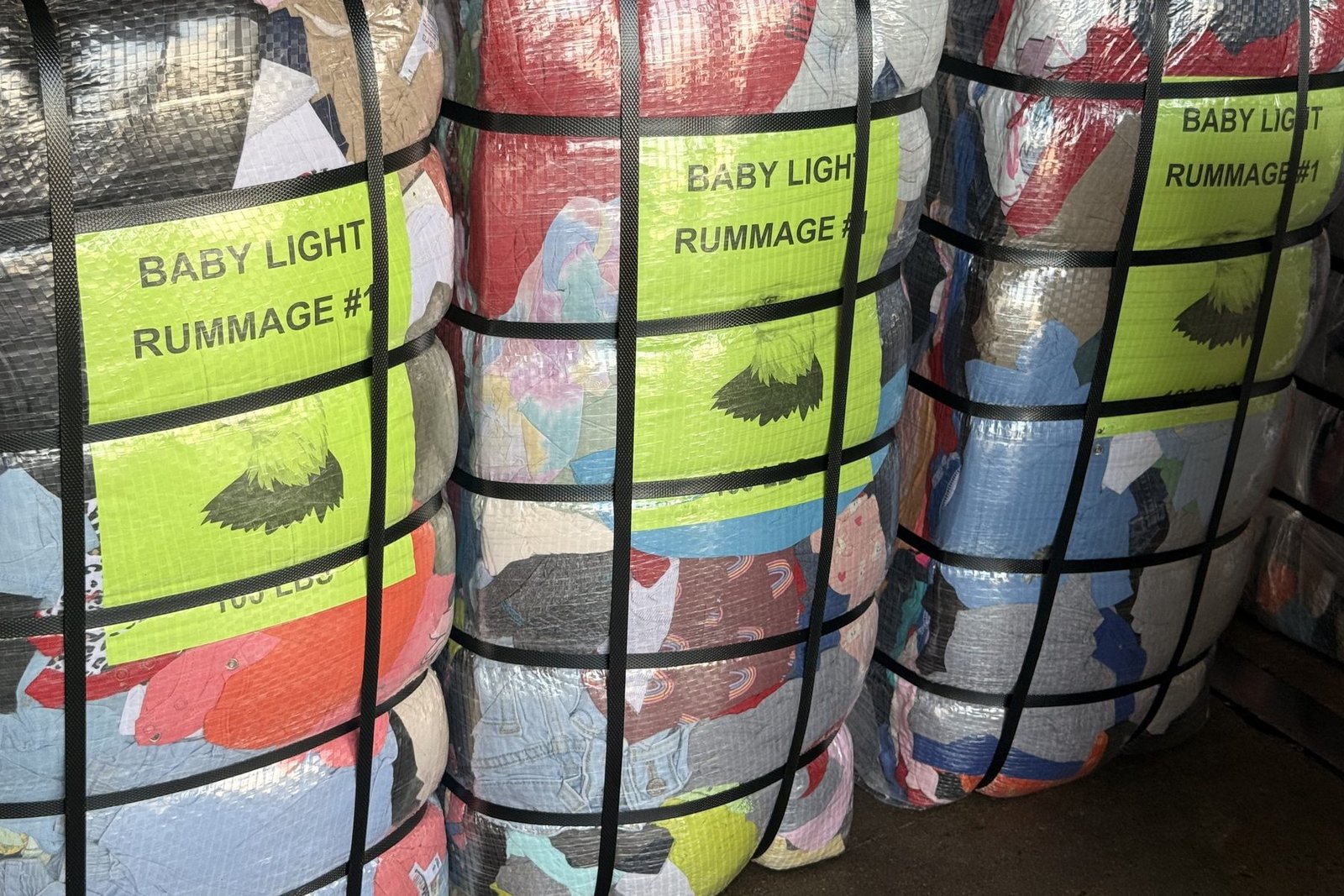
Compressed and labeled with lot codes. Each container loaded wall-to-wall, photographed before sealing — you see what ships before it leaves the dock.
Custom Grade Mixes
Most buyers don't want a single grade — they want a tuned mix. We blend grades and categories to your spec: e.g., 30% Grade A / 50% Grade B / 20% Grade C, or category-specific mixes.
See product pages for region-specific grade mixes, check our FAQ for shipping details, read our buyer’s guide for how to evaluate any supplier, or contact us to spec your container.
Ready to Spec Your Container?
Tell us your destination port, target grade mix, and monthly volume. We'll come back with pricing, lead times, and sample availability.